"Mostly from Australia and Chile" seems like the opposite of baggage, that sounds like about the best you could hope for in a global commodity, so many of which come from unstable regions, conflict regions, or outright adversaries.
Yes, I know that China does most of the refining/assembly, but that has little to do with the chemistry. "Building new Na-ion capacity outside China" is probably even harder than "building new li-ion capacity outside China."
>"Mostly from Australia and Chile" seems like the opposite of baggage, that sounds like about the best you could hope for in a global commodity, so many of which come from unstable regions, conflict regions, or outright adversaries.
So let's break it down with some facts (all easily searchable.)
(1) The graph states that Australia is the largest producer of Lithium, and states that of their exports, 90% goes to China.
(3) Lithium ion batteries are currently reliant on Cobalt for their cathode.
(4) The DRC (Congo) is the largest producer of Cobalt, then Indonesia, then Russia.
>"seems like the opposite of baggage ... unstable regions, conflict regions, or outright adversaries"
From (1) and (2) we can see that the world is dependent on China for the only viable battery option for a range of modern applications. Thus the claim that this isn't baggage is not supported. Secondly China is also considered an adversary of the USA, by the USA. Thirdly the claim that this does not involve unstable/conflict regions is also not supported due to (3) and (4).
Part two: you've also stated the below:
>"Building new Na-ion capacity outside China" is probably even harder than "building new li-ion capacity outside China."
While this is a baseless comment, let's look at it anyway:
(5) The article is specifically about the commencement of mass production of Na batteries in the USA.
That already refutes the core premise of your statement, but let's follow it further.
(6) The article notes that unlike Li batteries, the materials are trivially sourced domestically.
That's an important difference from Li batteries, and significantly boosts the viability of competitive production in the USA (and other countries outside of China).
> While this is a baseless comment, let's look at it anyway:
It's not baseless. This is a golden boy startup, blessed with save the Earth kudos and highly subsidized. The DOE spun this outfit up in 2020 with $19M. Michigan and Whitmer have fast tracked the one, modest, token plant, delivered the tax breaks and signed the contracts for a sodium battery power facility in the state. VC money chased after all this as you would expect.
Those are all temporary or one-time goodies. This is heavy industry and at some point all the love goes away: the subsidies go away, the exemptions go away. Then the foreign competitors steal your tech and undercut you.
At that point you have a choice: fail, or build out where labor is cheap, workers are disposable and regulators are just low-cost party agents, and use your position as US company to readily import your foreign made products.
Notice how none this has anything to do with what raw materials are involved or battery chemistry. It's not about those things. It never has been. The fact that the US has large reserves of sodium is not a factor: filling a ship with sodium and sending it to some foreign plant being only the most obvious thing to do.
> At that point you have a choice: fail, or build out where labor is cheap, workers are disposable and regulators are just low-cost party agents, and use your position as US company to readily import your foreign made products.
Why are any of us okay with humans being "disposable" anywhere on Earth?
I think is just the way of the world. Not saying it's right but it's just reality. I come from a place where people kill and do horrible things for 10 dollars a day to build the same battery with maybe a 10 percent drop in quality. I doubt anyone in the US would be willing to work for that comparative advantage or something at play. How would you ensure that doesn't happen? Making everyone equal via something like Marshall Plan type thing is considered Marxist rhetoric I doubt it would be viable right? Plus there's the issue of competing nations
Uplift labor and human rights movements everywhere so they can retain self-determination but still extinguish the hellscape of exploitation that we have currently.
We don't need anything top-down.
I understand there would be challenges with doing that, but I like to think a better world is possible and it starts with respecting others' humanity.
I'm not interest in a "no further regulation" option. I just don't think anyone in our country should dictate what other countries do. That's what I meant by top-down.
If other countries want regulations and labor rights, hell yeah.
Yep, that's predicted to be about 40% of the battery market by the end of this year.
And while what's happening in Africa with respect to conflict mining is nasty, it's worth pointing out that that this is a solvable social issue. A lot of battery and car companies are under a lot of pressure to not have conflict minerals in their supply chains.
Also, cobalt and lithium mining are a drop in the ocean compared to other forms of mining. Is it more sad when children are used to mine cobalt than when they are mining coal, iron, or copper? The reason nobody really talks about that is not that it's not happening but because the people raising issues about cobalt mining are being highly selective. People dying deep underground in coal mines is a regular thing that gets reported in the news occasionally. Some of those people are minors. Mining simply is unhealthy and dangerous. And it mostly happens in places where there is not a whole lot of attention to workplace safety; or indeed the age of the workers.
Never mind that conflict cobalt is also used in the oil and petrochemical industry. Which of course also uses oil at a ginormous scale. And never mind that nobody cares where that oil comes from or how it is produced. Or the ecological damage done to the environment producing and transporting it. E.g. Nigerian oil has had its fair share of social and ecological issues over the years. I remember there were some protests but Shell's market share never really suffered a lot.
Cobalt in batteries is fine if it is sourced responsibly. And it can be recycled when the battery eventually reaches its end of life.
Why did you spend 200 words arguing for the premise of my second point? Usually one spends time arguing against your opponent but ok, sure, I'm glad we both prefer refining and manufacturing in friendly countries.
> [the commencement of mass production of Na batteries in the USA] refutes the core premise of your statement
How so? This plant is one tiny step on a very, very long road. I'm glad to see it happen, but extrapolating the outcome of a race from the first few steps would be incredibly foolish. China can build Na-ion too, so the question becomes whether the difference in chemistry creates an advantage for one party or another.
> unlike Li batteries, the materials are trivially sourced domestically
So China can cut out the only part of the supply chain that leans towards the US sphere of influence, while the US gets a discount on shipping? This isn't the own you think it is.
Could have done without the first paragraph. :) I wouldn't be excited to have either Australia (supply locked up by China) or Chile (read anything re: politics last 5 years) as my sources. the general thrust that youre being flippantly dismissive to the point of shading instead of illuminating is correct. (requires discussion about new battery chemistry supply chains to only discuss lithium-ion (??) and specifically only lithium, and Chile and Australia)
What's that based on? Australia exporting most of it to China doesn't prove anything except that China is a major trading partner for Australia. If the problem is securing lithium for the US, then 1) the US could buy more (Lithium is sold for cash, not given away), or 2) it could set up more mines in Nevada (which has a ton of lithium, and would have lower transport costs to boot).
> youre being flippantly dismissive to the point of shading instead of illuminating
Let's turn down the temperature.
> I wouldn't be excited to have either Australia ... or Chile ... as my sources
China is even less excited than you are to have Australia and Chile as their sources. Eliminating a small pain from the USA and a big pain from China gives a net benefit to China, so it's weird to see it advertised as a net benefit for the USA.
That said, raw material availability isn't the limiting factor here. We probably shouldn't even be discussing it.
> requires discussion about new battery chemistry supply chains to only discuss lithium-ion (??)
That's the alternative Na-ion has to beat. We could build lithium refining and manufacturing capacity in the US sphere of influence. Evaluations of any new technology should compare it to the best available alternatives, yes?
Lithium Ion rely on cobalt nickel, but LFP do not, and also do not have the thermal runaway problems that lithium ion batteries do. This is close to being a solved problem.
I want to note the lithium there is not from the Salton Sea itself, but from geothermal brines in the rock under the sea. The area is a place of active volcanism so the brines are quite hot and have dissolved many interesting minerals.
All that is a lot to unpack, but ever since I saw University of Santa Clara use one of these batteries, I have been interested: Yes, ALL your points are both well taken and accurate. The DRC is a disaster in many ways:
The industry trend is to minimize the use of cobalt as much as possible. While the early generation of lithium ion batteries had high cobalt content, the most cutting edge ones -- eg, NCM/A-9 -- has already reduced the cobalt content by 50%-80%. SK On who supplies such batteries with high energy/nicke and low cobalt to Ford (F-150), Hyundai/Kia (Ioniq5/6, EV6/9). They also announced zero-cobalt NCM9+ -- meaning less than 1% in cobalt content.
> Lithium Iron Phosphate (LFP) has been ramping for a decade, with "no cobalt" as a selling point.
"No cobalt", plus safety, plus longevity (2,000 .. 3,000) cycles. BYD is claiming purchasers can expect 25 years battery life in the LFP cars. We will see I guess, but the math works out. In Australia we typically drive under 15,000 km a year. Assume the car has a 60 kWh battery, and that gets you 300 km. 2,000 [cycles / battery] * 300 [km / cycle] / 15,000 [km / year ] = 40 [years / battery]. So, no battery replacements for the life of a typical car. The USA drives their cars 25,000 km in a year, which works out at a typical 24 year lifetime for them.
The only reason I can see for the slow uptake of LFP in the USA is it was invented there, and the USA respects the patent. It's just recently expired. If that's true reason it's a fine example of patents holding back the economic development of a country.
Unless you are from those places. Ie few years ago we visited Salar de Uyuni, biggest salt flat in the world, properly amazing place. And one of the biggest deposits of lithium. Any form of mining (and you know in Bolivia it won't be eco-friendly unless miracle happens) will destroy at least some aspects of it. And there are massive plans.
Now sure not that many species of animals/plants will be affected compared to say some rainforest location, but it still pains me to even imagine it. If it will bring good jobs to the locals then at least some good locally will be achieved, but thats not always the case.
No animals/plants live on arid salt-flats. They pile the lithium salts and let it dry before carting it away. What changes if they also use the sodium?
"Lithium Mining Is Leaving Chile’s Indigenous Communities High and Dry (Literally)
As the metal fuels the clean tech boom, companies race to mine the Atacama Region. At stake: fragile ecosystems, scarce water resources, and ancient ways of life."
If you do industry in a place teeming with life, people try to stop it because you're harming lots of living things. If you do industry in a desolate place, people try to stop it because you're harming the few rare species that can survive there.
The more important issue to consider is: What is the global effect? In this case lithium mining means cheaper electric vehicles, which reduces demand for petroleum. Petroleum extraction & combustion is far more harmful to the environment, so this is a net win.
Cobalt, however, which is used in common lithium battery chemistries, is mostly sourced from the DRC (Congo), much of it under terrible conditions: forced labour, child labour, and rampant environmental degradation. The book Cobalt Red: How the Blood of the Congo Powers Our Lives [1] is a real eye-opener if you haven’t read it. Fascinating and deeply disturbing.
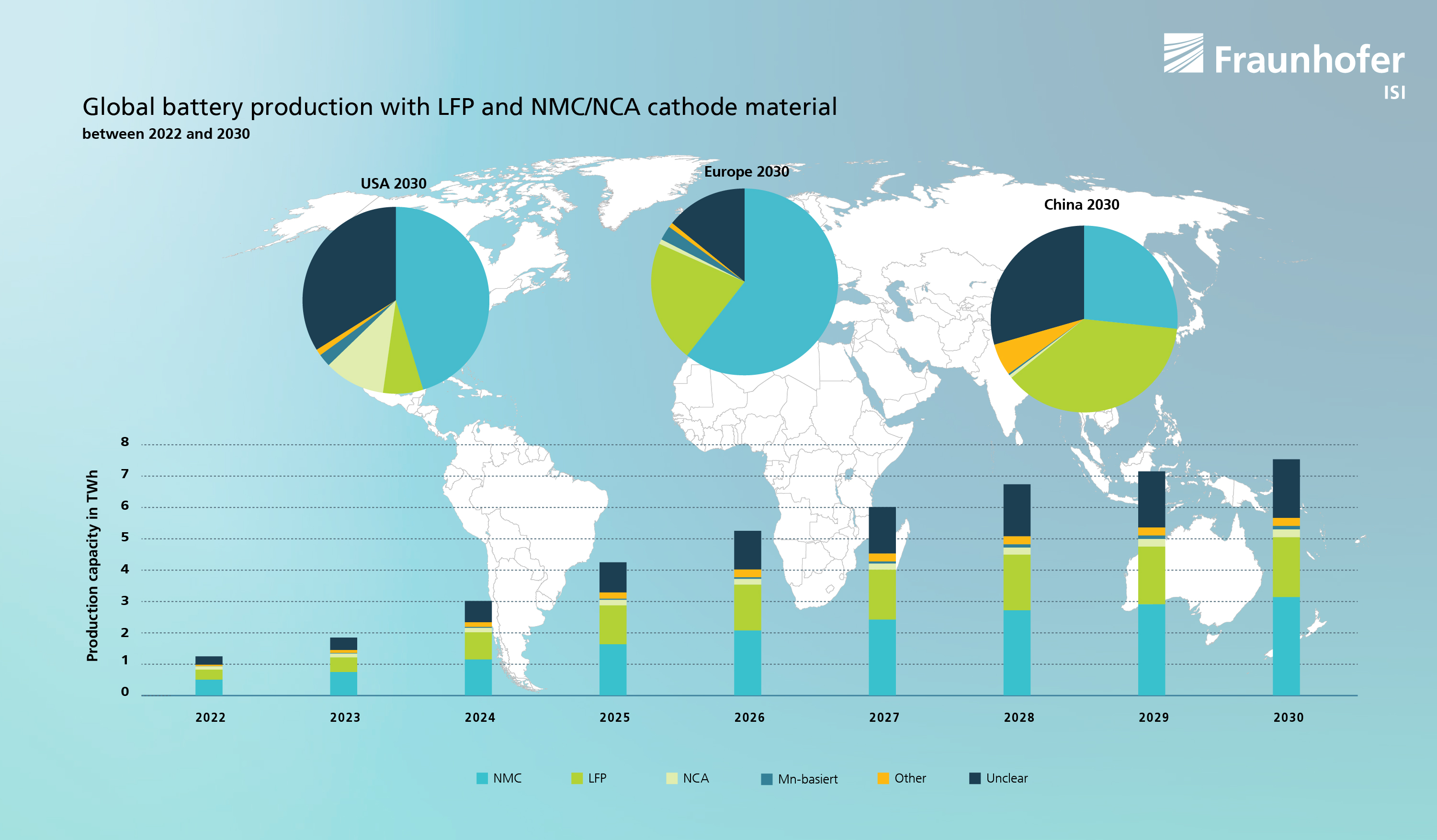
Since 2022, the majority of EVs manufactured have no cobalt in their batteries. Most manufacturers use lithium iron phosphate chemistry (LFP), which is cheaper and safer than NMC or NCA. The cobalt-based chemistries are only used in higher performance vehicles, where LFP's lower energy density becomes a problem.
>> Since 2022, the majority of EVs manufactured have no cobalt in their batteries. <<
This is not true at all. Most EV OEMs don't use LFP: even in China, LFP's market share just passed 50% in 2022. Outside China, it's overwhelmingly NCM/A.
LFP is a low-end battery most suitable for small/compact EVs with "urban" range.
Not yet. At least in the US the only LFP EVs available right now (Spring 2024) are certain models of the Ford Mustang Mach-E and the standard range Tesla Model 3. This may change over the coming months.


Yes, I know that China does most of the refining/assembly, but that has little to do with the chemistry. "Building new Na-ion capacity outside China" is probably even harder than "building new li-ion capacity outside China."